The Ultimate Guide to Growing Sweet Corn in Small Spaces
Sarah Sprout
The Ultimate Guide to Growing Sweet Corn in Small Spaces
Most gardening guides will tell you that corn needs wide open fields and acres of space. That is simply not true. With the right approach, you can grow sweet, tender corn on a balcony, patio, or in a tiny backyard garden. It takes some planning and a few tricks, but the reward of picking a fresh ear of corn just steps from your kitchen is hard to beat.
Why People Think Corn Needs Lots of Space
Corn is wind-pollinated, which means it relies on breezes to carry pollen from the tassels at the top of the plant down to the silks on the ears. In a commercial field, thousands of plants create a dense cloud of pollen. In a small garden, you need to be more intentional about pollination. But that is a solvable problem, not a dealbreaker.
Choosing the Right Varieties
Not all corn is created equal when it comes to small-space growing. Look for dwarf or short-stalk varieties that top out at four to five feet instead of the usual eight. Some excellent options include:
- **On Deck**: Bred specifically for container growing, reaching just four feet tall
- **Golden Midget**: Matures in only sixty days and stays compact
- **Strawberry Popcorn**: A gorgeous ornamental variety that grows well in pots
- **Tom Thumb Popcorn**: Another compact variety perfect for containers
Container Selection
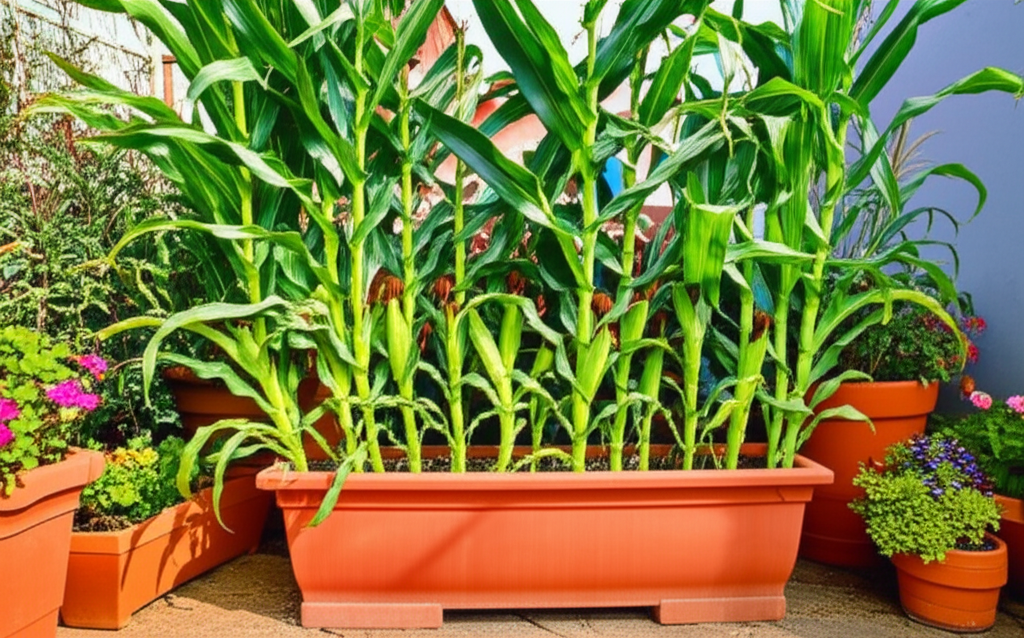
If you are growing on a patio or balcony, use the biggest containers you can manage. Each corn plant needs at least five gallons of soil, but ten gallons is better. Half whiskey barrels, large fabric grow bags, or repurposed storage bins with drainage holes all work well. The key is depth -- corn roots go down twelve to eighteen inches, so your container needs to be at least that deep.
For a good pollination block, plant four to six stalks per large container, spacing them about eight inches apart. If you have room for multiple containers, arrange them in a cluster rather than a line.
Soil and Feeding
Corn is a heavy feeder. It wants rich, fertile soil and plenty of nitrogen throughout the growing season. Start with a high-quality potting mix and add compost or aged manure -- about a third of the total volume. Once the plants are knee-high, begin feeding every two weeks with a balanced liquid fertilizer or fish emulsion.
Container-grown plants dry out faster than those in the ground, so consistent watering is critical. Check the soil daily during hot weather. The soil should stay evenly moist but never waterlogged. A layer of mulch on top of the soil helps retain moisture and keeps roots cool.
The Pollination Challenge
This is the single most important factor for small-space corn growers. Without proper pollination, you will get ears with missing kernels or no kernels at all. Here is how to handle it:
**Plant in blocks, not rows.** Even in containers, arrange your plants in a square or rectangular pattern. A block of sixteen plants (four by four) pollinates far better than a single row of sixteen.
**Hand-pollinate as insurance.** When the tassels at the top of the plants start shedding yellow pollen, shake the stalks gently each morning to help distribute it. For even better results, collect pollen by bending a tassel into a paper bag and shaking, then sprinkle that pollen directly onto the silks of each ear. Do this for three to four days in a row.
Planting Timeline
Corn needs warm soil -- at least sixty degrees Fahrenheit. In most areas, this means planting outdoors after the last frost date, usually late spring. If you are growing in containers, you can start a couple of weeks earlier since containers warm up faster than garden soil.
Sow seeds directly into your containers about one inch deep. Corn does not transplant well because its roots are sensitive to disturbance, so direct sowing is strongly preferred. You should see sprouts within seven to ten days.
Managing Common Issues
**Wind**: Tall corn stalks can blow over in containers. Place containers against a wall or fence for wind protection, or stake the plants once they reach two feet tall.
**Pests**: Corn earworms are the most common pest. Apply a drop of mineral oil to the tip of each ear once the silks start to brown. This suffocates the worms without any chemicals.
**Suckers**: Small shoots that emerge from the base of the plant are called suckers. In small-space growing, remove them so the plant puts all its energy into the main stalk and ears.
Harvest Time
Sweet corn is ready when the silks turn brown and dry, the ear feels full and firm when you squeeze it, and a kernel pierced with your thumbnail releases milky white juice. Clear juice means it is not ready yet. Doughy juice means you waited too long.
Pick your corn and eat it as soon as possible. The sugars start converting to starch the moment the ear is picked. There is a reason old-timers say to start the water boiling before you go out to pick -- the fresher, the sweeter.
Growing corn in small spaces takes a bit more attention than a sprawling garden plot, but the satisfaction of pulling a perfect ear from a pot on your balcony is something every gardener should experience at least once.
Sarah Sprout
Master Gardener
Sarah has been growing corn and other vegetables for 15 years.